Penetration testing cost in the UK in 2026 refers to the total financial effort required to simulate real-world cyberattacks using human-led security expertise under recognised testing standards. Penetration testing cost involves consultant time, technical expertise, tooling usage, reporting effort, and compliance-aligned validation activities.
Pentesting cost is calculated using a resource-based effort model: (Total Man-Days × Daily Rate) plus mandatory compliance reporting and retesting fees.
The minimum cost for pen testing is £2,000 for limited-scope assessments.
SMBs and mid-market organisations in the UK can access penetration testing within the £3,500–£20,000 range for the most common assessment types.
The maximum cost of penetration testing exceeds £100,000.
Penetration testing cost is affected by testing type, scope depth, system complexity, regulatory requirements, tester seniority, and post-test verification obligations.
The table below summarises the average penetration testing costs in the UK for 2026 by testing type and the factors that influence pricing.
| Penetration Testing Type | Average Cost (GBP) | Factors Affecting the Cost |
| Web Application Penetration Testing | £2,500 – £30,000 | Business logic complexity, authentication flows, and user roles |
| API Penetration Testing | £3,500 – £25,000 | Endpoint count, authentication method, data sensitivity |
| Mobile Application Penetration Testing | £3,500 – £30,000 | iOS/Android platforms, obfuscation, backend APIs |
| Cloud Penetration Testing | £3,500 – £30,000 | Cloud services, IAM complexity, and misconfigurations |
| Network Penetration Testing | £3,500 – £30,000 | IP range size, internal vs external scope, segmentation, Activity Directory security posture |
| Wireless Penetration Testing | £3,000 – £30,000 | Number of WAPs, encryption type, site complexity, wireless solutions |
| Active Directory Penetration Testing | £3,500 – £25,000 | Domain size, number of domains, trust relationships, hybrid identity |
| Firewall Penetration Testing | £2,000 – £10,000 | Rulebase size, virtual instances, egress testing |
| PCI Penetration Testing | £4,000 – £25,000 | CDE scope, segmentation validation, and audit evidence |
| Black Box Penetration Testing | £3,500 – £25,000 | Reconnaissance effort, asset discovery, attack surface, number of IPs/ranges |
| Grey Box Penetration Testing | £3,500 – £30,000 | User roles, authenticated paths, and access depth |
| White Box Penetration Testing | £5,000 – £35,000 | Source code volume, configuration access, design and architecture |
| Social Engineering Penetration Testing | £3,500 – £30,000 | Employee count, attack vectors, campaign duration, remote/onsite testing |
| Red Team Penetration Testing | £25,000 – £75,000+ | Engagement length, stealth level, attack vectors and objectives |
| Continuous Penetration Testing (PTaaS) | £10,000 – £35,000 / year | Asset coverage, scan frequency, and manual validation |
| Automated Penetration Testing | £3,500 – £15,000 | Asset count, scan frequency, integrations |
| Physical Penetration Testing | £8,000 – £30,000 / year | Locations, access controls, and on-site execution |
| IoT Penetration Testing | £5,000 – £30,000+ | Hardware teardown, firmware, radio protocols |
| Blockchain Penetration Testing | £5,000 – £35,000 | Smart contract complexity, code size, and financial risk |
| Operational Technology (OT) Testing | £5,000 – £35,000 | Safety constraints, industrial protocols, and sites |
| Artificial Intelligence Penetration Testing | £5,000 – £35,000 | Model access, dataset size, guardrails, Integrations |
What is the cost to perform Web Application Penetration Testing in the UK?
The cost to perform web application penetration testing in the UK in 2026 starts at £2,500 for limited-scope assessments and can exceed £50,000 for enterprise-grade platforms. The average project price falls between £3,500 and £30,000, depending on application complexity and testing depth. Entry-level web penetration testing is typically priced from £2,000 to £3,500, while large-scale engagements surpass £50,000 when multi-layer business logic and cloud components are included.
Entry-level web application assessments for SMBs with smaller websites and single authentication flows are available from £2,500-£5000, providing essential vulnerability coverage without enterprise-scale pricing.
The hourly rate starts from £94 and increases up to £175, based on CREST-aligned consultant pricing models. Daily testing fees are set between £750 and £1,100 for manual assessments conducted under recognised UK testing standards. Monthly pricing begins at £4,000 and can exceed £10,000 for continuous testing models such as PTaaS with integrated retesting. Annual testing programmes are budgeted between £10,000 and £30,000 for organisations maintaining compliance across multiple web applications.
Small-scale web application penetration testing costs between £2,000 and £4,000 for a 5–10-page static site with one authentication flow and no third-party integrations. Medium-scope testing costs between £5,000 and £12,000 for a dynamic application with authentication, database interactions, and a UK-based payment gateway. Large-scale testing costs between £12,000 and £25,000 for SaaS platforms with multiple user roles, APIs, and microservices architecture. Enterprise-level web app pentesting costs between £20,000 and £50,000+ for multi-week assessments (web, cloud, business-logic attack paths).
Manual testing increases web application pentesting costs in the UK by £2,000–£5,000, as testers actively validate business logic and identify authorisation flaws. Each additional user role increases testing costs by approximately £1,500 due to expanded privilege-escalation validation. Compliance-driven web application penetration testing increases costs by approximately 20% due to formal reporting requirements. Retesting after remediation increases costs by £2,000–£5,000 when organisations require vulnerability confirmation. CREST or CHECK-accredited testers increase application and API penetration testing costs by aligning work with higher daily rate thresholds of £1,200–£1,500.
What is the cost to perform Network Penetration Testing?
The cost to perform network penetration testing in the UK in 2026 ranges from £3,500 to £30,000 per project. The average price of network penetration testing in the UK ranges from £5,000 to £15,000 per project for standard internal or external assessments. The minimum cost ranges from £2,000 to £4,000 for a basic external test with limited public-facing IP addresses. The maximum cost exceeds £50,000 for enterprise environments. Organisations with limited external exposure can reduce network testing costs by combining external perimeter validation with internal assessments.
The hourly cost of network penetration testing in the UK in 2026 ranges from £125 to £375, inferred from CREST-aligned daily pricing models. The daily cost of testing ranges from £750 to £1,100 for a manual consultant operating under recognised UK testing standards. The monthly fee ranges from £1,200 to £8,000+ for continuous assurance or PTaaS-based testing models. The yearly cost of network penetration testing ranges from £15,000 to £30,000+ for organisations maintaining annual internal and external network security coverage.
Small-scope testing costs between £2,000 and £4,000 for a basic external pentest. Medium-scope network pentesting costs between £3,500 and £10,000 for an internal network assessment of up to 200 connected endpoints and lateral movement analysis covering active directory network. Large-scale testing costs between £8,000 and £20,000+ for hybrid enterprise environments that include on-premise servers and cloud infrastructure such as AWS or Azure. Enterprise-level network testing costs between £15,000 and £30,000+ for multi-week red team engagements targeting high-value business assets.
Internal network penetration testing increases testing costs compared to external testing because assessors evaluate post-breach movement and trust relationships. Manual network testing increases costs by aligning work with daily rates of £750-£1,100, as testers validate attack paths that automated tools miss. Compliance-driven testing in the UK increases costs by approximately 20% due to formal methodology requirements. Retesting and remediation validation increase network penetration testing costs in the UK by £2,000–£5,000 when organisations require confirmation of vulnerability fixes.
What is the cost to perform Cloud Penetration Testing?
The cost to perform cloud penetration testing in the UK in 2026 ranges from £3,500 to £30,000+ per project. The average price of cloud penetration testing in the UK ranges from £3,500 to £15,000 per project for standard assessments covering production cloud environments. The minimum cost ranges from £3,500 to £5,000 for a basic security assessment of a simple cloud setup with limited services. The maximum cost exceeds £30,000 for enterprise cloud environments (hybrid infrastructure, simulated red-team attack scenarios).
The hourly cost of cloud penetration testing in the UK in 2026 ranges from £125 to £375. The daily cost of testing ranges from £750 to £1,100 for a manual consultant operating under recognised UK security testing standards. The monthly fee ranges from £4,000 to £10,000+ for ongoing security assurance or PTaaS-based testing models. The yearly cost of cloud penetration testing ranges from £10,000 to £30,000+ for organisations maintaining annual cloud, network, and application security coverage.
Small-scope cloud testing costs between £3,000 and £5,000 for a configuration-focused assessment of a single cloud account with limited compute and storage services. Medium-scope cloud testing costs between £6,000 and £12,000 for an environment hosting a production web application with virtual machines and role-based access controls. Large-scale cloud testing costs between £12,000 and £25,000 for multi-cloud environments (microservices, authentication boundary validation). Enterprise-level cloud penetration testing costs between £20,000 and £40,000+ for multi-week engagements targeting hybrid infrastructure and business-critical cloud workloads.
An increased architectural scope increases testing costs because a larger number of cloud services and assets expands the attack surface that requires validation. White-box cloud testing increases costs compared to black-box testing because assessors analyse configurations, permissions, and trust relationships in greater depth. Compliance-driven cloud testing in the UK increases costs by approximately 20% due to formal methodology requirements and evidence-based reporting obligations. Manual cloud testing increases costs by aligning work with daily rates of £1,000–£1,500. Retesting and remediation validation increase cloud pen testing costs by £2,000–£5,000 when organisations require confirmation that security gaps have been closed.
What is the cost to perform API Penetration Testing in the UK?
The cost to perform API penetration testing in the UK in 2026 ranges from £3,500 to £25,000+ per project, depending on the number of endpoints and authentication complexity. The average price of API penetration testing in the UK ranges from £4,500 to £12,000 per project for REST or GraphQL APIs with moderate endpoint coverage. The minimum cost ranges from £3,500 to £5,000 for a simple API with limited endpoints and standard authentication controls. The maximum cost exceeds £25,000 for enterprise-grade microservices architectures supporting large-scale platforms.
The hourly cost of API penetration testing in the UK in 2026 ranges from £130 to £350, reflecting the specialist skill set required for endpoint-level security validation. The daily cost of testing ranges from £750 to £1,100 for CREST-accredited consultants conducting manual API assessments. The monthly fee ranges from £3,000 to £8,000 for continuous API security assurance integrated into CI/CD pipelines.
Small-scope API testing costs between £2,500 and £4,500 for a single REST API supporting mobile authentication with 5–10 endpoints and OAuth2 controls. Medium-scope API testing costs between £6,000 and £12,000 for GraphQL-based commerce backends with 30+ endpoints, complex queries, and third-party integrations. Large or enterprise API testing costs between £15,000 and £30,000+ for open banking or financial APIs requiring FAPI-aligned validation across more than 100 endpoints.
API endpoint volume increases testing costs because each exposed route requires individual authentication, authorisation, and logic validation. Advanced authentication mechanisms increase costs by £1,500–£3,000 due to extended testing of token handling, MFA flows, and session boundaries. Manual API testing increases costs by aligning work with daily rates of £1,000–£1,500, as testers validate business logic that automated tools do not reliably detect. Regulatory alignment with frameworks such as OWASP ASVS increases costs by approximately 20% due to expanded reporting and evidence requirements.
What is the cost to perform Mobile Application Penetration Testing in the UK?
The cost to perform mobile application penetration testing in the UK in 2026 ranges from £3,500 to £30,000+ per project. The average price of mobile app penetration testing in the UK ranges from £6,000 to £15,000 per project for applications tested on both iOS and Android. The minimum cost ranges from £3,500 to £5,000 for a single-platform mobile application with limited functionality. The maximum cost exceeds £30,000 for high-security mobile applications operating in regulated sectors.
The hourly cost of mobile application pen testing in the UK in 2026 ranges from £150 to £400, reflecting demand for mobile reverse-engineering expertise. The daily cost of testing ranges from £750 to £1,100 due to the use of specialised hardware, emulators, and forensic tooling. The annual cost of mobile penetration testing ranges from £6,000 to £20,000 for organisations maintaining recurring compliance or app store security certification.
Small-scope mobile testing costs between £3,500 and £6,000 for a single-platform iOS application without backend data persistence and limited local storage exposure. Medium-scope mobile testing costs between £8,000 and £14,000 for retail applications deployed on both iOS and Android with IPC testing and API backend validation. Large or enterprise mobile testing costs between £18,000 and £30,000+ for banking or healthcare applications using custom encryption.
Multi-platform testing increases mobile pentesting costs by 80-100% because iOS and Android require separate toolsets, testing methodology and reverse engineering workflows. Authentication complexity increases costs by £1,500–£3,000 when applications implement biometrics, MFA, or federated login systems. Code obfuscation increases costs by £2500-£10,000 if customers specifically opt for code-level review because testers must reverse-protect binaries before logic analysis. Regulatory alignment with standards such as OWASP MASVS impacts price increase by approximately 20% due to extended validation and documentation requirements.
What is the cost to perform Wireless Penetration Testing?
The cost to perform wireless penetration testing in the UK in 2026 ranges from £3,000 to £30,000+ per project. The average project cost is around £5,500. The minimum cost ranges from £3,000 to £4,000 for small office environments, and the maximum cost exceeds £30,000 for multi-site enterprise or campus-wide wireless assessments.
The hourly cost of wireless penetration testing ranges from £80 to £300+, with a standard daily rate of £800-£2,500. The monthly managed cost ranges from £500 to £10,000+ for organisations requiring continuous wireless monitoring. The yearly subscription cost ranges from £6,000 to £120,000+ for enterprises maintaining recurring compliance audits.
Small-scope wireless penetration testing costs between £3,000 and £4,000 for a single office location with 1–5 wireless access points using WPA2 or WPA3-PSK encryption, with testing completed within 1–2 days. Medium-scope engagements cost between £4,000 and £8,000 for multi-floor offices or warehouses with 6–20 access points, guest network segmentation, and 802.1X or RADIUS-based authentication, including rogue access point detection. Large or enterprise wireless penetration testing costs range from £8,000 to £20,000+ for campus environments or multi-site organisations with 50+ access points, complex IoT or VoIP segmentation, and recurring signal leakage assessments.
A UK retail enterprise with 10 locations pays £15,500 for an annual wireless penetration test required for PCI DSS compliance, calculated using a £12,000 base project fee, £1,500 in travel and logistics, and a £2,000 retesting fee to validate remediation of weak encryption identified during testing.
Wireless penetration testing costs increase by £1,000–£5,000 when on-site presence is required across multiple locations due to travel and accommodation. Each additional wireless access point increases testing effort by extending on-site signal capture and de-authentication attempts, while enterprise-grade authentication mechanisms such as certificate-based 802.1X or MFA add 1–2 extra testing days. Rogue access point detection and segmentation testing further increase cost by adding specialised hardware usage and manual validation to ensure guest networks cannot access internal corporate systems.
What is the cost to perform PCI Penetration Testing in the UK?
The cost to perform PCI penetration testing in the UK in 2026 ranges from £4,000 to £25,000+ per project. The average price of PCI penetration testing in the UK ranges from £4,000 to £15,000 per project for Level 2, Level 3, and Level 4 merchants with a clearly defined PCI scope. The minimum cost ranges from £4,000 to £6,000 for a very small CDE involving a limited number of internal systems and external IP addresses. The maximum cost exceeds £25,000 for enterprise retail environments with distributed CDEs across multiple locations.
Organisations requiring both PCI penetration testing and broader network assessments benefit from combined scoping, as overlapping systems only require a single validation pass.
The hourly cost of PCI penetration testing in the UK in 2026 ranges from £100 to £250, reflecting the structured and repeatable nature of compliance-driven testing. The daily cost ranges from £750 to £1,100 because PCI assessments follow predefined methodologies and narrower attack surfaces. The yearly cost of PCI penetration testing ranges from £5,000 to £12,000 as PCI DSS mandates annual internal and external testing, which organisations bundle into a compliance retainer.
Small-scope PCI testing costs between £4,000 and £6,000 for a small e-commerce business using a hosted payment page with approximately five internal in-scope IPs and two external IPs. Medium-scope PCI testing costs between £5,000 and £9,000 for retailers operating around twenty in-scope devices, including POS systems and payment-processing servers. Large-scope PCI testing costs between £10,000 and £15,000+ for enterprises with multi-site CDEs that require extensive scope validation and QSA coordination.
A clear PCI scope definition reduces testing costs by enabling assessors to focus exclusively on in-scope systems rather than performing broad reconnaissance. Manual PCI testing increases costs by aligning work with daily consultant rates, as testers validate segmentation, access controls, and data flow protections. Highly accredited testers increase PCI testing costs by operating at the upper end of compliance-focused pricing tiers. Remediation validation increases PCI penetration testing costs because vulnerability confirmation requires a separate billable engagement.
What is the cost to perform Black Box Penetration Testing in the UK?
The cost of black-box penetration testing in the UK in 2026 ranges from £3,500 to £25,000+ per project. The average price of black box testing in the UK ranges from £6,000 to £10,000 per project for mid-market web applications or external networks. The minimum cost ranges from £3,500 to £5,000 for small public-facing environments with limited attack surfaces. The maximum cost exceeds £40,000 for enterprise-wide testing or full red team simulations.
The hourly cost of black-box penetration testing in the UK in 2026 ranges from £125 to £375. The daily cost ranges from £750 to £1,100 for CREST-accredited consultants conducting deep external assessments. The annual cost of black-box penetration testing ranges from £10,000 to £30,000+ for organisations running recurring security programmes.
Small-scale black-box testing costs between £3,500 and £5,000 for assessments limited to a single corporate website and its public-facing URLs. Medium-scope black box testing costs between £6,000 and £12,000 for e-commerce platforms. Large-scale black box penetration testing costs between £12,000 and £25,000+ for enterprises exposing multiple services such as VPNs, mail servers, and public APIs.
An unclear scope definition increases black-box testing costs because assessors spend additional time on discovery and attack surface mapping. Highly certified testers increase black-box testing costs due to the premium expertise required. Remediation validation increases black-box penetration testing costs because fix verification constitutes a separate testing phase.
What is the cost to perform Red Teaming?
The cost to perform red teaming in the UK in 2026 ranges from £25,000 to £75,000+ per project. The average price of red teaming in the UK ranges from £25,000 to £45,000 per project for adversarial simulations. The minimum cost for red-team engagements ranges from £25,000 to £30,000. The maximum cost exceeds £75,000 for enterprise simulations running over multiple months.
The hourly cost of red teaming in the UK in 2026 ranges from £175 to £450. The daily cost ranges from £950 to £1,500 for senior consultants. The yearly cost of red teaming ranges from £45,000 to £75,000 for organisations running continuous adversarial simulations.
Small-scope red teaming costs between £25,000 and £35,000 for four-week targeted simulations. Medium-scope red teaming costs between £25,000 and £45,000 for 4 to 8-week engagements assessing detection across corporate offices and cloud environments. Enterprise-level red teaming costs £60,000+ for multi-month stealth operations.
Higher stealth requirements increase red teaming costs by 30–50% because a mature attack setup and slower attack execution significantly increase consultant hours. Multi-vector operations increase costs because physical access requires separate skill sets. Extended reporting and executive debriefing increase costs because red team outputs include strategic detection and response recommendations.
What is the cost to perform Grey Box Penetration Testing?
The cost of performing grey-box penetration testing in the UK in 2026 ranges from £3,500 to £30,000+ per project. The average price of grey box testing in the UK ranges from £5,000 to £12,000. The minimum cost ranges from £3,500 to £5,000 for testing a single user role in a basic web application. The maximum cost exceeds £30,000 for complex SaaS platforms with multiple interconnected systems.
The hourly cost of grey box penetration testing ranges from £125 to £300, aligned with manual validation of an authenticated attack path. The daily rate ranges from £1,000 to £1,400, as testers validate authorisation boundaries and business logic using provided credentials. The monthly cost ranges from £4,000 to £10,000 for organisations running recurring authenticated assessments. The yearly cost ranges from £15,000 to £40,000+ for businesses maintaining continuous grey box testing to support compliance and secure development cycles.
Small-scale grey-box testing costs between £3,500 and £5,000 for short assessments using a single standard user account to identify privilege escalation paths. Medium-scope grey box testing costs between £7,000 and £12,000 for ERP or business platforms, where testers validate horizontal access using multiple credential sets. Large-scale grey box testing costs between £15,000 and £25,000 for regulated platforms such as healthcare systems.
Each additional authenticated role increases grey box penetration testing costs by approximately £1,200 per day because testers must re-evaluate business logic from a new trust level. Complex role hierarchies increase costs because privileged relationships require deeper validation. Manual testing increases costs because automated tools cannot reliably detect role-based access control flaws. Detailed remediation guidance increases costs because authenticated findings often require developer-level explanation.
What is the cost to perform White Box Penetration Testing?
The cost to perform white box penetration testing in the UK in 2026 ranges from £5,000 to £35,000+ per project. The average price of white box testing in the UK ranges from £8,000 to £20,000 per project due to the additional time required for configuration analysis. The minimum cost ranges from £5,000 to £7,000 for targeted reviews of critical modules. The maximum cost exceeds £35,000 for enterprise-wide audits covering full application stacks and infrastructure code.
The hourly rate for white-box penetration testing ranges from £94 to £175. The daily rate ranges from £1,200 to £1,600, and the monthly cost ranges from £5,000 to £12,000. The annual cost ranges from £20,000 to £60,000+ for regulated organisations maintaining continuous, secure development and compliance validation.
Small-scope white box testing costs between £5,000 and £8,000 for focused audits of specific APIs. Medium-scope white box testing costs between £12,000 and £18,000 for comprehensive reviews of applications such as mobile banking platforms. Enterprise-scope white-box testing costs £30,000+ for deep audits of global platforms that involve infrastructure-as-code and core transaction engines.
White box testing costs scale with code volume, often increasing by £1,000–£2,000 per 10,000 lines of critical code reviewed. Detailed remediation guidance increases costs because developers require precise instructions for fixes. Architectural complexity increases costs because interdependent services demand cross-layer validation. Extended reporting increases costs because white box findings require technical documentation suitable for engineering teams.
What is the cost to perform Social Engineering Penetration Testing?
The cost to perform social engineering penetration testing in the UK in 2026 ranges from £3,500 to £30,000+ per project, depending on campaign duration, employee coverage, and attack vectors used. The average price of social engineering testing in the UK ranges from £3,500 to £20,000 per project for two-to-four-week campaigns targeting 50 to 100 employees. The minimum cost ranges from £3,500 to £5,000 for a single-vector phishing campaign with limited reporting. The maximum cost exceeds £30,000 for multi-vector simulations combining phishing, vishing, and physical pretexting.
The hourly cost of social engineering testing in the UK in 2026 ranges from £125 to £350, reflecting planning, scenario development, and execution effort. The daily cost ranges from £7,50 to £1,100 for specialist human-factors consultants conducting controlled attack simulations. The monthly or yearly cost ranges from £5,000 to £15,000 per month for organisations running ongoing security-awareness measurement programmes.
Small-scale social engineering penetration testing costs between £3,500 and £5,000 for a one-week voice phishing and email phishing campaign targeting approximately 50 employees using a single pretext, such as an HR policy update, cyber security enforcement policies, portal updates, or too good to be true scenarios to test staff awareness and training levels. Medium-scope social engineering testing costs between £8,000 and £15,000 for two-week campaigns combining targeted phishing with follow-up vishing calls to key personnel. Large-scale social engineering testing costs between £18,000 and £30,000+ for four-week red-team simulations.
Campaign duration increases costs because longer simulations require repeated planning, execution, and monitoring cycles. Multi-vector attacks increase costs because phishing, phone-based manipulation, and physical access testing require separate skill sets. Higher employee counts increase costs because each additional target expands execution and analysis effort. Detailed reporting increases costs because organisations require department-level metrics and executive-ready summaries.
What is the cost to perform Active Directory Penetration Testing?
The cost to perform Active Directory penetration testing in the UK in 2026 ranges from £3,500 to £25,000+ per project. The average price of AD testing in the UK ranges from £6,000 to £15,000 per project for assessments lasting five to ten days. The minimum cost is £3,500-£5,000 for a single, simple domain with fewer than 200 users. The maximum cost exceeds £25,000 for enterprise environments operating multi-forest or hybrid Azure AD architectures.
The hourly cost of Active Directory penetration testing ranges from £125 to £350. The daily rate ranges from £1,000 to £1,500, as testers evaluate authentication flows and directory misconfigurations. The monthly cost ranges from £5,000 to £12,000 for organisations running staged AD security reviews across multiple domains or environments. The annual cost ranges from £10,000 to £35,000+ for enterprises maintaining continuous identity security validation.
Small-scale AD testing costs between £3,500 and £5,000 for short internal assessments using a single standard user credential to identify immediate privilege-escalation paths. Medium-scope AD testing costs between £7,000 and £12,000 for hybrid environments with approximately 1,000 users, focusing on weaknesses in on-premises and cloud synchronisation. Large-scale AD testing costs range from £15,000 to £25,000+ for multi-forest enterprises that require detailed trust analysis and remediation planning.
Domain complexity increases costs because additional forests, trusts, and legacy systems expand attack paths. Hybrid Azure AD integration increases costs because testers evaluate both cloud and on-premise identity flows. Manual testing increases costs because automated tools cannot reliably map chained privilege escalation techniques. Remediation planning increases costs because AD findings often require structured guidance for IT teams.
What is the cost to perform Continuous Penetration Testing?
The cost to perform continuous penetration testing in the UK in 2026 ranges from £10,000 to £35,000+ per year for mid-market organisations. The average monthly price of CPT in the UK ranges from £1,200 to £3,000 for subscriptions covering one medium web application and an external network perimeter consisting of several systems/IPs. The minimum monthly cost ranges from £800 to £1,500 for basic packages targeting a small IP range or single application, ideal for very small or micro businesses. The maximum monthly cost exceeds £10,000 for enterprise programmes monitoring global infrastructure.
Continuous testing programmes reduce per-finding costs compared to annual one-off assessments because vulnerabilities are identified closer to introduction, reducing remediation complexity.
The hourly cost of continuous penetration testing ranges from £125 to £350. The daily rate ranges from £750 to £1,100, as automated scanning and manual validation operate in parallel. The monthly cost ranges from £4,000 to £8,000 for organisations maintaining recurring testing cycles under PTaaS models.
Small-scope CPT programmes cost approximately £1,500 to £3,000 per month for continuous coverage of a single SaaS application with quarterly manual validation. Medium-scope CPT programmes cost approximately £4,000-£8,000 per month for external networks of around 50 IPs and two core applications, with monthly reporting. Large-scale CPT programmes cost approximately £10,000 to £15,000+ per month for enterprise coverage spanning hybrid cloud environments.
Asset volume increases CPT costs because each additional system expands scanning and validation requirements. Manual validation frequency increases costs because human testers must confirm exploitable findings. Compliance reporting increases costs because dashboards and evidence tracking require additional configuration.
What is the cost of Automated Penetration Testing?
The cost to perform automated penetration testing in the UK in 2026 ranges from £3,500 to £15,000+, depending on licence scope, asset volume, and deployment scale. The average cost varies from £3,500 to £5,000 per project for one-off compliance scans or short-term assessments. The minimum cost ranges from £500 to £1,000 for light scanning of a single application or URL. The maximum cost exceeds £15,000 for enterprise platforms with AI-driven prioritisation and global asset coverage.
Monthly subscription pricing ranges from £300 to £1,200 for organisations requiring recurring automated reports. Yearly subscription costs range from £3,500 to £8,000 for continuous scanning of approximately 5 web applications or 100 IP addresses. Hourly pricing does not apply because vendors almost always bill by licence or project.
Small-scale automated penetration testing costs around £3,500 -£5000 per scan of a public-facing website. Medium-scope deployments cost approximately £1,500 per month for vulnerability scans across networks with 250 IP addresses. Large-scale automated platforms exceed £5,000 per month when organisations centralise scanning across tens of thousands of assets. A UK law firm pays £3,600 per year to maintain weekly automated scans of its external perimeter to satisfy Cyber Essentials Plus requirements.
Automated testing costs scale with asset count, ranging from £50 to £150 per IP or URL, as larger inventories require broader licensing. Increasing the scan frequency by 25% increases costs by 25% when organisations move from monthly to daily scans. Human validation increases costs by £1,500 per day when consultants review false positives before developer remediation.
What is the cost of Physical Penetration Testing?
The cost to perform physical penetration testing in the UK in 2026 ranges from £8,000 to £30,000+ per project, depending on site complexity, engagement length, and stealth requirements. The average price ranges from £8,000 to £15,000 for controlled physical intrusion simulations that include reconnaissance, covert entry, and reporting. The minimum cost ranges from £8,000 to £10,000 for basic walk-through audits or social engineering attempts. The maximum cost exceeds £30,000 for multi-site global breach simulations.
The daily cost of physical penetration testing ranges from £1,500 to £2,000 due to travel requirements and elevated operational risk. The monthly cost ranges from £3,000 to £6,000 for organisations scheduling periodic on-site assessments. The annual cost ranges from £15,000 to £30,000 for organisations conducting bi-annual testing of critical facilities.
Small-scope physical testing costs around £4,000 for one-day tailgating and reception-area assessments. Medium-scope engagements cost approximately £12,000 for 5-day tests that include night-time lock-picking and access-bypass attempts. Extensive or enterprise-level physical testing exceeds £30,000 for coordinated red-team exercises targeting multiple offices. A London data centre pays £12,500 for a four-day covert-entry test involving badge cloning and biometric bypass attempts.
Physical testing costs increase by £2,000–£5,000 per location as site complexity grows. Full-stealth engagements increase costs by approximately 40% due to extended reconnaissance and slower execution. Night-time or weekend operations apply a 1.5× rate multiplier because of unsociable hours. Hardware disposal adds £500–£1,000 when planted devices cannot be safely recovered.
What is the cost of IoT Penetration Testing?
The cost to perform IoT penetration testing in the UK in 2026 ranges from £5,000 to £30,000+ per device. The average cost ranges from £12,000 to £25,000 for complete hardware and cloud-API assessments. The minimum cost for firmware-only static analysis ranges from £5,000 to £8,000. The maximum cost exceeds £30,000 for safety-critical medical or industrial IoT systems in enterprise organisations.
Hourly rates range from £125 to £225 due to specialist lab equipment and reverse-engineering expertise. Monthly retainers range from £5,000 to £10,000 for manufacturers running continuous R&D cycles. Yearly IoT security budgets range from £40,000 to £100,000 for organisations releasing multiple connected products annually.
Small-scope IoT penetration testing costs around £7,000 for firmware-only reviews of smart sensors. Medium-scope engagements cost approximately £18,000 for a full device teardown and cloud backend analysis. Large or enterprise testing exceeds £50,000 for complete ecosystem assessments covering hardware, mobile apps, cloud services, and radio communication. A smart medical device manufacturer pays £22,000 for a three-week evaluation of an insulin pump involving hardware glitching and Bluetooth LE interception.
Destructive testing increases costs by £500–£2,000 per unit because devices often sustain permanent damage. Complex radio protocols increase costs by £3,000 due to specialised RF tooling. Cloud-connected devices increase costs by £5,000 as testing expands into mobile and API layers.
What is the cost of Firewall Penetration Testing?
The cost to perform firewall penetration testing in the UK in 2026 ranges from £2,000 to £10,000+ per project. The average price ranges from £3,000 to £6,000 for configuration-focused assessments of high-availability clusters. The minimum cost ranges from £2,000 to £3,000 for a single virtual firewall or NSG review. The maximum cost exceeds £8,000 for layered enterprise firewall architectures.
Hourly rates range from £94 to £175 when firewall testing is billed outside fixed project pricing. Daily rates range from £750 to £1,100 for configuration analysis rather than exploit development. Monthly managed-service pricing ranges from £4,000 to £10,000 when firewall reviews form part of a broader security programme. Yearly firewall testing programmes cost between £15,000 and £40,000, which depends on segmentation zones and review frequency.
Small-scope firewall penetration testing costs around £2,000 for rule-based reviews of single office firewalls. Medium-scope engagements cost approximately £5,500 for segmentation audits across campus networks. Large or enterprise reviews exceed £12,000 for global SD-WAN and multi-layer deployments. A mid-tier retail bank pays £5,200 for a 4-day audit of Palo Alto firewalls to meet PCI DSS v4.0 requirements.
Rulebase volume increases costs by £1,000 per 500 rules due to extended analysis time. Virtual firewall instance adds £1,500. Egress testing adds £1,200 because data-exfiltration paths require deeper validation.
What is the cost of Blockchain Penetration Testing?
The cost to perform blockchain penetration testing in the UK in 2026 ranges from £5,000 to £35,000+ per audit. The average cost for manual smart-contract audits ranges from £8,000 to £25,000. The minimum cost ranges from £5,000 to £12,000 for simple ERC-20 or NFT contracts. The maximum cost exceeds £35,000 for multi-chain DeFi protocols or Layer-1 blockchains.
Hourly rates range from £125 to £300 due to the scarcity of specialised blockchain security talent. Daily rates of blockchain penetration testing range from £950 to £1100, which covers full-day manual code review and remediation validation. Monthly blockchain security retainers range from £1,000 to £3,500 when projects require continuous audit support. Yearly blockchain security programmes cost between £20,000 and £50,000, depending on the number of audits performed.
Small-scope audits cost around £5,000-£10,000 for NFT minting contracts. Medium-scope audits cost approximately £15,000-£20,000 for decentralised exchange smart-contract suites. Enterprise audits exceed £40,000 for Layer-2 scaling solutions. A UK DeFi startup pays £20,000 for a manual liquidity-pool audit focused on re-entrancy and flash loan risks.
Smart-contract complexity increases costs based on the lines of code because dense financial logic requires deeper manual reasoning. Other features, such as gas-optimisation reviews, increase costs by approximately 15-20% when auditors balance security fixes with transaction efficiency. Protocol-level testing adds £5,000 due to the analysis of the consensus mechanism. Release-critical timelines increase blockchain penetration testing costs because audits conducted before token generation events or mainnet launches require accelerated delivery and additional validation cycles.
What is the cost of Operational Technology (OT) Penetration Testing?
The cost to perform OT penetration testing ranges from £5,000 to £35,000+ per project. The average price range for site-specific industrial assessments is £7,000 to £20,000. The minimum cost for lab-based PLC or HMI testing ranges from £5,000 to £10,000. The maximum cost exceeds £35,000 for multi-site utility network audits.
Hourly rates range from £125 to £300 due to highly specialised OT certifications. Daily rates range from £950 to £1,500, reflecting passive-only testing, safety controls, and production-risk mitigation. Monthly OT security retainers range from £1,000 to £3,500 for organisations requiring continuous risk oversight during active production cycles. Long-term OT risk-management programmes range from £30,000 to £100,000 per year, depending on site count and regulatory exposure.
Small-scope OT testing costs around £5,000 for single production-line assessments. Medium-scope engagements cost approximately £12,000 for complete manufacturing-plant audits. Extensive or enterprise operational technology penetration testing exceeds £40,000 for regional power or water networks. A UK manufacturing facility pays £10,000-£13000 for a ten-day Siemens PLC security assessment.
Geographic spread adds £1,000–£3,000 in travel and subsistence costs, or this is also agreed as a fixed cost or up to 8% of the project. Legacy protocol testing adds £5,000 due to specialist tooling requirements.
What is the cost of Artificial Intelligence (AI) Penetration Testing?
The cost to perform artificial intelligence penetration testing in the UK in 2026 ranges from £5,000 to £35,000+ per project. The average cost ranges from £6,500 to £15,000 for AI red-team engagements. The minimum cost ranges from £5,000 to £8,000 for single chatbot assessments. The maximum cost exceeds £35,000 for proprietary LLMs or AI-driven trading systems.
Hourly rates range from £150 to £300 due to combined data-science and security expertise. Daily rates range from £9,50 to £1,500, which include manual adversarial prompt engineering and response analysis. Monthly retainers exceed £10,000 for continuous AI red-teaming programmes. Yearly AI security programmes cost between £30,000 and £120,000, which depends on model count, update frequency, and regulatory exposure.
Small-scope AI testing costs around £5,000 for chatbot jailbreak assessments. Medium-scope engagements cost approximately £12,000 for corporate RAG systems. Large or enterprise testing exceeds £15,000 for AI-driven credit-scoring platforms. A mid-market UK insurance firm pays £10,000 for a twelve-day AI red-team engagement to test data-leakage risk.
Dataset-poisoning in artificial intelligence penetration testing analysis adds £1,500 due to training data integrity validation. Strong guardrails advisory adds £2,500, as bypassing layered safety controls requires understanding the current layout and extensive adversarial prompt engineering. White-box model access increases AI penetration testing costs because direct visibility into embeddings, system prompts, and retrieval pipelines requires deeper validation than prompt-only testing.
What factors affect the cost of penetration testing?
Listed below are the factors that affect the cost of penetration testing.
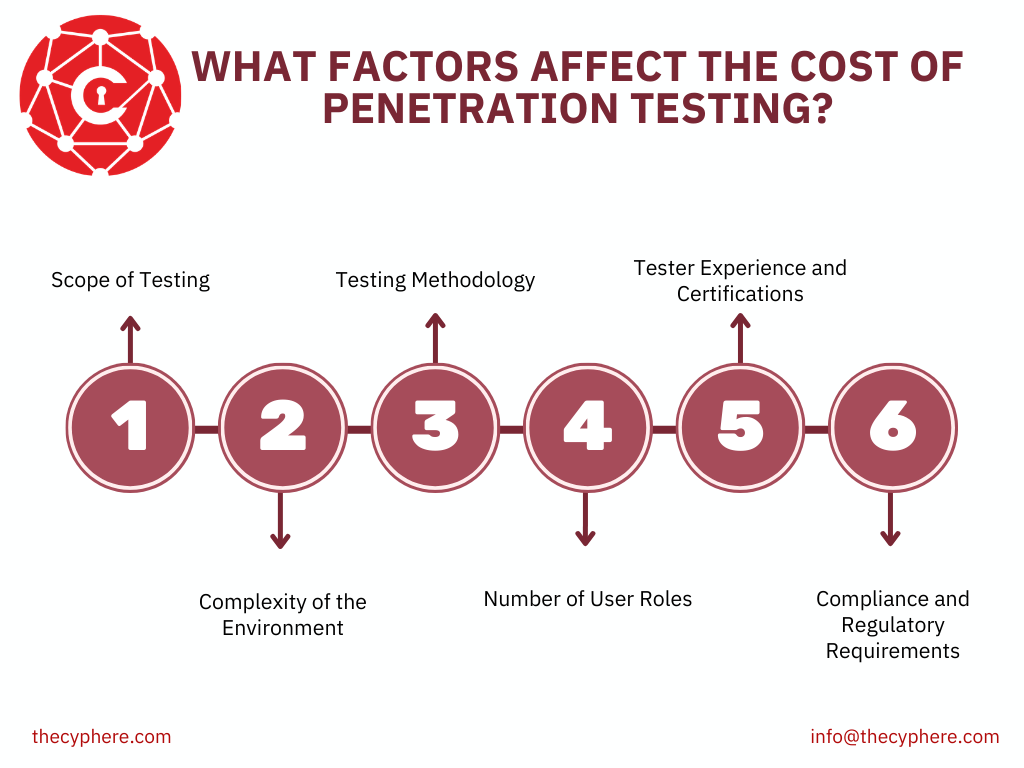
1. Scope of Testing
Scope defines the number of public IP addresses, web applications, authenticated user portals, exposed APIs, and cloud entry points included in testing. An IP address requires port enumeration, and a web application requires input mapping testing, all of which consume separate tester hours. Single-website assessments cost approximately £2,500–£3,500, while environments containing dozens of IPs, applications, and APIs exceed £6,000.
2. Complexity of the Environment
Complexity reflects environments that include multi-tenant SaaS logic, hybrid cloud networking, third-party identity providers, segmented networks, apps and API integrations and legacy system integrations. These environments require attack chaining across authentication flows, API-to-backend logic, and asynchronous workflows, which increases manual validation time per finding. Penetration tests for these architectures cost approximately £5,000–£20,000 because exploitation requires cross-layer verification rather than single-point testing.
3. Testing Methodology
Testing methodology defines whether testers receive no credentials, limited user access, or full source code and architecture diagrams before testing begins. Black-box testing requires full external surface discovery, endpoint mapping, and unauthenticated attack-path construction, increasing reconnaissance hours before exploitation starts. White-box testing increases effort because it requires manual code review and configuration validation, which places complex assessments in the £10,000–£22,000+ range.
4. Number of User Roles
User roles define distinct permission sets, such as administrator, manager, standard user, and read-only accounts, within an application. Each role requires separate session handling, authorisation boundary testing, horizontal access checks, and vertical privilege-escalation attempts, which cannot be reused across roles. Applications with multiple roles or a fully RBAC (role-based access control) matrix increase penetration testing cost by 15–20% due to repeated attack execution and validation effort based on each permission level.
5. Tester Experience and Certifications
Tester experience reflects hands-on exploitation skill, attack chaining capability, and familiarity with real-world breach patterns, not tool usage. Senior consultants perform manual privilege escalation, logic abuse, and multi-step exploit chaining that automated scanners and junior testers do not execute. Professionals holding certifications such as OSCP, CREST, or CHECK bill approximately £120–£240 per hour in 2026, directly increasing project cost through higher day rates.
6. Compliance and Regulatory Requirements
Compliance requirements impose mandated testing scopes, fixed methodologies, and audit-specific reporting formats defined by standards such as PCI DSS. Compliance-driven assessments require network segmentation validation, control-to-finding mapping, evidence preservation, and auditor-readable documentation, extending both testing and reporting phases. PCI DSS penetration testing for limited environments costs approximately £6,000-£20,000 due to the added procedural and documentation workload.
What is the cost to perform penetration testing in the industry?
The cost to perform penetration testing for finance and banking organisations ranges from £8,000 to £24,000+ per engagement.
Advanced threat-simulation exercises for banks frequently exceed £30,000 because Red Team operations operate within regulated financial systems.
The cost to perform penetration testing for healthcare environments falls between £5,000 and £16,000.
The cost to perform penetration testing for e-commerce and retail platforms ranges from £6,000 to £25,000.
The cost to perform penetration testing for technology and SaaS companies ranges from £3,500 to £40,000, aligned with SOC 2 Type II and ISO 27001 controls.
Cloud-native SaaS platforms range in cost from £6,000 to £20,000.
The cost to test manufacturing and industrial IoT environments ranges from £6,000 to £48,000, reflecting NIST and ISA/IEC 62443 controls.
Why are penetration testing costs too high?
Penetration testing costs are high because it requires human-led safe exploitation to prove how an attacker would work in your environment, rather than automated scanning, which is performing high level checks and contains false positives. This puts senior tester day rates at £750-£1100. A shortage of experienced security professionals increases the cost of penetration testing.
Certified testers command annual salaries of £60,000–£100,000+, and these staffing costs are reflected directly in engagement pricing. Complex environments increase effort, as full-scope assessments span 3–5 weeks, especially for API-driven and cloud-native systems. Operational expenses also contribute, including professional liability insurance, specialist tooling licences, and controlled testing infrastructure. High pricing reflects loss prevention rather than service markup, as average UK breach costs reach £3.29 million, which makes a £20,000–£50,000 penetration test a rational financial safeguard.
Organisations can offset high testing costs by prioritising risk-based scoping, bundling related assessments, and selecting providers that include retesting within quoted fees rather than billing remediation verification separately.
What are the hidden costs associated with penetration testing?
Hidden costs in penetration testing mean indirect or ancillary expenses that are not included in the vendor’s base quotation but are required to achieve a complete, compliant, and risk-reduced security outcome.
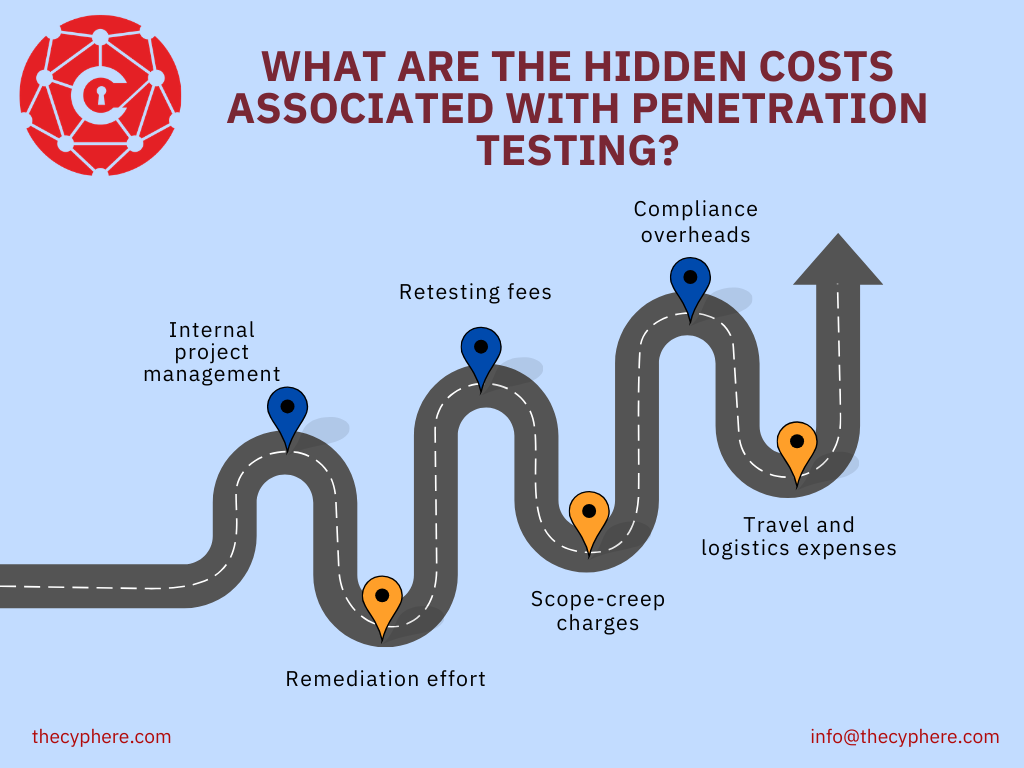
Listed below are all the hidden costs associated with penetration testing.
- Internal project management: Internal project management costs add 10%–20% of the base fee, as internal teams must allocate time for project management, scoping calls, credential provisioning, change management, and coordination with testers.
- Remediation effort: Remediation effort is the most considerable hidden expense, since fixing identified vulnerabilities requires hundreds of engineering hours, code refactoring, infrastructure changes, or new security tooling.
- Retesting fees: Retesting fees range from approximately £1,600 to £4,000, because many providers treat vulnerability verification as a separate billable engagement rather than part of the initial scope.
- Scope-creep charges: Scope-creep charges add approximately £800-£8,000+ when previously undocumented assets, such as API endpoints, subdomains, or cloud services, are discovered mid-assessment.
- Compliance overheads: Compliance overheads add approximately £1,200-£2,400 when reports must be reformatted or rewritten to satisfy auditors’ standards (PCI DSS or HIPAA).
- Travel and logistics expenses: Travel and logistics expenses range between 5% – 10% of the project fee when on-site presence is required for physical or OT testing, with travel and accommodation.
How to find the best penetration testing company within your budget?
You can find the best penetration testing company within your budget by clearly defining required test types, compliance obligations, and critical asset boundaries before requesting quotes. Penetration testing providers that offer bundled assessments – combining web, API, network, or cloud testing into single engagements – typically reduce total expenditure by 20%-25% compared to separate projects. Organisations should request scope flexibility, where providers adjust testing depth to match risk priorities rather than applying fixed methodologies regardless of business size. Retesting inclusion and remediation support is another cost differentiator; providers that include remediation support within the original fee eliminate £5,000–£5,000 in hidden follow-up charges. Mid-market organisations benefit from selecting providers such as Cyphere as a penetration testing service provider in the UK, experienced with SMB and mid-market growth-oriented environments, as these firms structure engagements around budget constraints rather than enterprise-scale assumptions
How to calculate penetration testing cost?
You can calculate the penetration testing cost in the UK by applying a resource-based effort model that uses consultant man-days instead of per-IP pricing.
The standard calculation follows the formula (Total Man-Days × Daily Rate) + Compliance Reporting Premium + Retesting Fee. Daily rates range from £800–£1,000 for junior testers and £1,200–£1,800 for senior CREST-certified consultants.
A web application or small network engagement requires 5–10 man-days, which directly determines the base project cost.
How to reduce penetration testing costs?
Every business is conscious of its investments in terms of resources and time. Cyphere helps organisations by combining multiple testing scopes into a single engagement that reduces penetration testing costs by 20%–25% compared to separate projects. Organisations that bundle web application, API, and network penetration testing into one coordinated assessment eliminate duplicate scoping, reconnaissance, and reporting phases. A unified engagement covering three testing types that would individually cost £18,000–£25,000 can be delivered for £14,000–£19,000 when scoped together, because testers reuse environment knowledge and reduce administrative overhead.
A great example is combining an IT security health check with the Cyber Essentials Plus certification with separate deliverables. This avoids resourcing loads while saving costs on the customer end.