External and internal penetration testing are both subtypes of network (infrastructure) penetration testing.
External network penetration testing is a process of simulating a real-world attack on an organisation’s network from outside to detect vulnerabilities and security issues in internet-facing assets, initial entry points, and exposed services.
Internal network penetration testing is the process of assessing the internal network’s security and identifying vulnerabilities that an attacker could exploit after gaining initial access.
The main differences between external and internal network penetration testing are based on the starting point, scope, and security focus. External pentesters begin by simulating an attack on the perimeter from outside the organisation’s network, with no internal access, while internal pentesters start from within the network, assuming the attacker has already gained entry. The scope of external tests is public-facing systems (websites, VPNs), whereas internal pentesting covers internal systems ( user accounts, shared resources). External pentesting focuses on perimeter defence, while internal network pentesting emphasises the post-breach impact.
What is External Network Penetration Testing?
External network penetration testing is a security assessment performed from outside an organisation’s network to identify and evaluate security issues and vulnerabilities in internet-facing assets (external services, email servers). It is also called Perimeter pentesting. It’s performed with no prior knowledge of the target system. It helps pentesters discover weaknesses that are visible to anyone on the internet.
Pentesters uncover vulnerabilities such as exposed ports/services on Pubic IPs, misconfigured firewalls, weakly protected login portals, vulnerable entry points in web apps, third-party exposure risks, and outdated software on internet-facing servers.
External network penetration testing simulates an attack on an organisation’s network from the perspective of a real-world, unauthorised attacker. It is a primary method for assessing initial attack vectors that organisations don’t uncover through internal penetration testing.
Techniques used for external pentesting include credential-stuffing attempts on exposed login portals, WAP/Firewall evasion, SSL/TLS downgrade testing, DNS Hijacking, OSINT gathering, external port scanning, and service fingerprinting. These techniques in external network penetration testing help the pentester determine whether an attacker can gain a foothold from outside the network and to what extent the network is compromised.
What is the goal of external network penetration testing?
The goal of external network penetration testing is to identify and address vulnerabilities that could be exploited by attackers from outside an organisation, thereby protecting data, ensuring security, and meeting compliance requirements, according to a 2023 study by M. Alhamed, titled “A Systematic Literature Review on Penetration Testing in Networks: Future Research Directions”.
What Is Internal Network Penetration Testing?
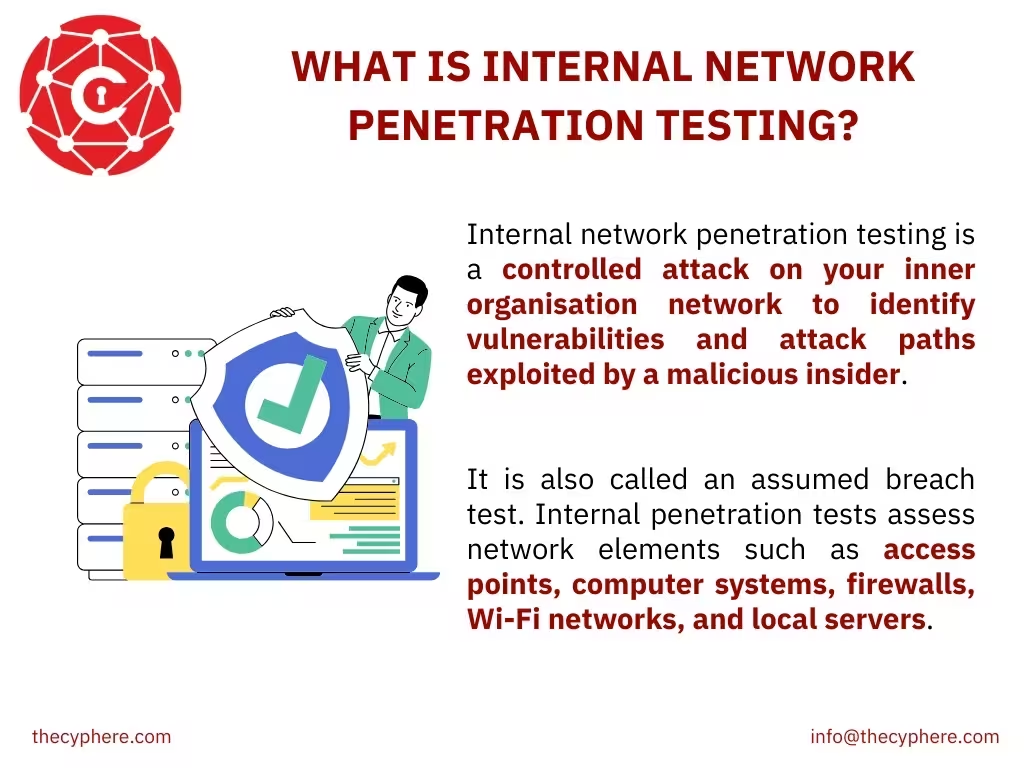
Internal network penetration testing is a controlled attack on your inner organisation network to identify vulnerabilities and attack paths exploited by a malicious insider. It is also called an assumed breach test. Internal penetration tests assess network elements such as access points, computer systems, firewalls, Wi-Fi networks, and local servers.
Internal pentesters identify weaknesses such as insecure internal services, outdated software, weak authentication policies, misconfigured Active Directory, excessive user permissions, gaps in endpoint monitoring, and gaps in incident response.
Internal network penetration testing simulates the position of a malicious insider, a compromised employee device, or an attacker who has bypassed perimeter defence. Internal penetration testing helps gauge what an attacker could achieve with initial access to a network.
The techniques used in internal network pentesting are bypassing endpoint security, testing network segmentation boundaries, network scanning, credential harvesting, privilege escalation, and exploitation of internal-only protocols (SMB, LDAP, RDP, WinRM). These internal penetration testing techniques help pentesters understand how attackers move laterally within the environment and the damage they could cause once they gain access. The results of internal network penetration testing reveal the potential impact of an attack on an organisation’s confidential information.
What is the goal of internal network penetration testing?
The goal of internal network penetration testing is to proactively identify and address security vulnerabilities within an organisation’s internal systems before they can be exploited by malicious actors, according to a 2023 study by Mohamed Jasem Alhammmadi, titled “Continuous Internal Penetration Testing (CIPT)”.
What are the differences between External and internal network penetration testing?
The differences between external and internal network penetration testing lie in their starting point, scope, and security focus.
External testing assesses the security and resilience of an organisation’s perimeter against outsider attacks, while internal pentesting examines the extent of damage to the internal network by an insider attack. External tests identify vulnerabilities in public-facing assets (web servers, VPNs, and cloud services), whereas internal tests uncover insider-level risks (privilege escalation, lateral movement, and sensitive data access). An external network pentest measures how an attacker gains access to the organisation’s network, while an internal network pentest determines what happens once malicious actors are inside the network.
Research and industry guidelines recommend using both types of testing for a robust security posture. External tests protect against outside threats, while internal tests address risks from within and post-breach scenarios. Both types of test should be performed by the organisation annually and after major changes and breaches.
They are essential to meet compliance requirements (PCI DSS, SOC 2, ISO 27001). Both tests provide a comprehensive security assessment: external covers perimeter security, while internal determines post-breach impact.
You need both external and internal network penetration testing. External testing simulates an internet-based attacker focused on your perimeter assets, such as firewalls, public services, and perimeter defences. Internal testing is more critical for risk because your internal infrastructure is the operational backbone for your business. It simulates an attacker who has already breached the perimeter or an insider threat. We assess the ability to move laterally, escalate privileges, and access sensitive assets inside your network.
External testing examines the front door. Internal testing examines your entire house after the initial breach occurs. Most breaches involve perimeter compromise followed by internal exploitation. Testing only your external perimeter misses the lateral movement and privilege escalation that causes the most damage.
The comparison of external network penetration testing with internal network penetration testing is described in the table below.
| Features | External Network Penetration Testing | Internal Network Penetration Testing |
| Access Level / Initial Access | No internal access; testing begins from the public internet to simulate an outsider. | Begins with internal or authenticated access to replicate insider or post-breach scenarios. |
| Scope | Targets internet-facing assets (public IPs, domains, VPNs, perimeter systems). | Covers internal hosts, servers, endpoints, applications, and segmented networks. |
| Vulnerabilities Focus | Identifies weaknesses visible externally (open ports, exposed services, perimeter misconfigurations) | Detects internal flaws (misconfigurations, insecure protocols, lateral movement paths, and weak logins) |
| Reconnaissance Depth | Broad surface-level mapping of the external attack surface. | Deep enumeration of internal systems, AD structures, services, and network segmentation. |
| Attack Simulation Realism | Simulates real-world external cyberattacks from outside the network. | Simulates insider threats, compromised users, or post-phishing attacker behaviour. |
| Prior Knowledge | Minimal information; relies heavily on OSINT and external discovery. | Receives internal details such as credentials or network topology. |
| Evasion Techniques | Attempts to evade perimeter defences (firewalls, WAFs, VPNs, IPS). | Must bypass endpoint security, internal IDS/IPS, and monitoring systems. |
| Resources Requirement | Fewer internal resources required; limited interaction with internal teams | More coordination is needed with IT due to a broader internal scope and deeper testing. |
| Duration | 3 days to 3 weeks; Usually shorter because the external scope is smaller. | 1 to 6 weeks; Longer engagement due to extensive internal systems and segmentation. |
| Cost | £2,000–£4,000; lower cost due to narrower focus and reduced complexity. | £5,000–£12,000; Higher cost because of larger scope, testing depth, and required expertise. |
| Blue Team Involvement | Tests SOC’s response to external threats, scans, and intrusion attempts. | Evaluates internal monitoring effectiveness, endpoint alerts, and lateral movement detection |
| Business Disruption Risk | Low risk since testing occurs outside the internal network. | Moderate risk due to interaction with live systems and internal services. |
| Physical Security | Not included | May involve onsite testing, badge access, and device tampering. |
| Social Engineering Component | May include phishing external users (optional) | Includes insider-style social engineering (tailgating, credential harvesting). |
| Outcome / Reporting | Highlights exposure to internet-based threats and perimeter weaknesses. | Reveals internal compromise paths, segmentation gaps, and privilege escalation risks. |
| Expertise Requirements | Requires strong knowledge of perimeter exploitation and OSINT skills. | Requires expertise in internal networks, AD, endpoint security, and post-exploitation techniques. |
When to Choose External Network Penetration Testing?
Organisations should choose external network penetration testing when they need to evaluate internet-facing assets, meet compliance requirements, and regularly assess perimeter security (especially after new deployments).
External penetration testing should be performed to evaluate how well internet-facing assets (firewalls, web servers, VPNs) resist unauthorised access attempts. Many standards ( PCI DSS, ISO 27001) mandate regular external penetration testing to ensure ongoing security and compliance, according to a 2023 study byKamal Uddin Sarker et al., titled “Penetration Taxonomy: A Systematic Review on the Penetration Process, Framework, Standards, Tools, and Scoring Methods”.
External penetration tests must be performed after deploying new internet-facing services (web app, cloud service) and after a major update (firewall rule changes, DNS modifications). These external tests ensure that major updates don’t introduce new vulnerabilities in the network. External tests must be scheduled regularly, on a quarterly or yearly basis, to protect the organisation’s network and identify new vulnerabilities that an outsider attacker could exploit.
External network penetration testing is a priority immediately after a security breach. Small to Mid-Sized Businesses (SMEs) should always choose external network penetration testing services, as they are more vulnerable to external attacks due to limited internal security infrastructure.
Penetration testing experts believe that the whole point of having an external is to test if your internal resources are up to “par”. You can do fewer externals. But you’ll always need them to do a “self-sanity check, if your internal team does a great job and externals never manage to find any vulnerabilities.
When to choose Internal network penetration testing?
Organisations should perform an internal penetration test when they have concerns about weak internal controls, lateral movement risks, or insider threats. It must be performed after major network changes, such as the deployment of new security tools, domain migrations, and network segmentation. It is recommended to conduct an internal penetration test when a new user gains elevated privileges or after a security breach.
It is recommended to run an internal network test after a merger and acquisition. Some industries (health, finance, energy) must perform an internal network audit to comply with industry standards (ISO 27001 or PCI DSS). Organisations with a strong external defence layer should focus more on internal network penetration testing services.
Internal testing helps determine what further exploitation is possible once inside the network, if an external attacker bypasses perimeter defences, according to a 2018 study by Lei Wang, titled “Design and Research on the Test of Internal Network Penetration Test”.
When to choose both internal and external network penetration testing?
Organisations should choose both internal and external network penetration testing to get a comprehensive risk assessment. Compliance standards (ISO 27001, PCI DSS, SOC 2) often require both internal and external penetration testing to ensure comprehensive security coverage.
Large organisations with complex internal infrastructure should choose both internal and external penetration testing. Finance, energy, and healthcare industries also need to utilise a holistic security approach by implementing both internal and external penetration tests. These industries find and fix external and internal vulnerabilities to comply with stringent cybersecurity regulations and protect sensitive customer data.
As network size and complexity increase, so do the potential attack surfaces. Both internal and external tests are necessary to identify misconfigurations, weak access controls, and overlooked vulnerabilities across all network segments, according to a 2018 study by Lei Wang, titled “Design and Research on the Test of Internal Network Penetration Test”.
Both internal and external network penetration testing services help organisations understand the potential impact of a breach and the effectiveness of their security measures. Organisations should conduct both internal and external penetration tests at least annually and after significant system changes.
External vs Internal Network Penetration Testing: Lateral movement
Lateral movement refers to actions taken after an initial compromise, in which attackers move within the internal network to escalate privileges or access additional systems. This is generally part of the post-exploitation or internal testing phase, not the initial external assessment, according to a 2022 study by Mohamed Chahine Ghanem, titled “Hierarchical reinforcement learning for efficient and effective automated penetration testing of large networks”.
External vs Internal Network Penetration Testing: Tools and Techniques Used
Tools used for internal network pentests include BloodHound, CrackMapExec, Responderr, Impacket, and Empire, while tools used for external network pentests include Nmap, Burp Suite, Nikto, OWASP ZAP, and Hydra.
Techniques used for internal network penetration testing include fingerprinting, manual vulnerability testing, ACL testing, network security control testing, Trojan testing, and Privilege Escalation testing. Techniques used for external network pentesting are data breach testing, footprinting, password strength testing, IDS/IPS testing, and scrutinising for information leakage.
What are the advantages of External network pentesting when compared to internal network penetration testing?
Five advantages of external network pentesting over internal network penetration testing are listed below.
- Evaluate public-facing system strength: External network penetration evaluates the strength of public-facing security controls (firewalls, VPN gateways, web applications, and public IP ranges). Internal penetration testing doesn’t focus on the organisation’s perimeter, so it doesn’t evaluate perimeter strength.
- Identify internet-exposed vulnerabilities: External pentesting detects internet-exposed network vulnerabilities (open ports, misconfigured DNS records, exposed services). An external test highlights exploitable weaknesses in the public system, enabling the organisation to fix them and improve perimeter security. Internal pentesting does not test internet-facing entry points.
- Check the perimeter’s resistance: External network pentesting checks the network’s resistance to unauthorised intrusion attempts to check whether an attack can break through perimeter defences. Internal penetration testing doesn’t involve replicating perimeter attack scenarios such as exploiting misconfiguration or bypassing authentication systems.
- Validate perimeter hardening: External tests validate perimeter hardening by determining whether external-facing systems follow the best practices (patching, encryption). An internal penetration test doesn’t provide any such validation.
- Assess the effectiveness of external monitoring: External penetration testing assesses the effectiveness of the external monitoring system by exposing security gaps (delayed response to scanning, brute force attempts, or suspicious inbound traffic). Internal penetration testing doesn’t assess the external threat detection system.
What are the advantages of internal network pentesting when compared to external network penetration testing?
Seven advantages of internal network pentesting when compared to external network penetration testing are listed below.
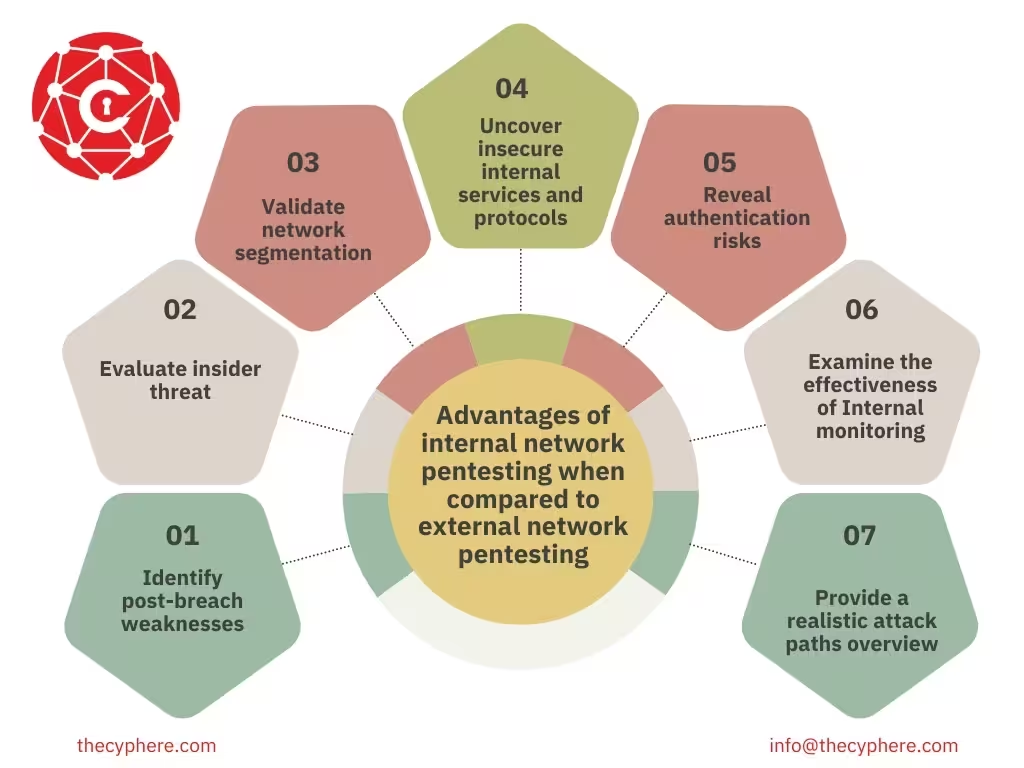
- Identify post-breach weaknesses: Internal network penetration testing identifies post-breach weaknesses such as lateral movement, privilege escalation, and access to sensitive internal systems. External pentesting cannot identify vulnerabilities that exist only within the internal network.
- Evaluate insider threat: Internal penetration testing evaluates the extent of damage to the network as a result of insider threat from an employee, contractor, or a compromised internal device. External testing doesn’t simulate trusted-network abuse.
- Validate network segmentation: Internal network penetration testing validates whether network segments (VLANs, internal zones) are properly isolated. External network pentesting doesn’t interact with the internal segmentation layer.
- Uncover insecure internal services and protocols: An Internal penetration test identifies weaknesses in internal services (SMB, RDP, LDAP, internal APIs). External network penetration doesn’t identify weaknesses in internal services, as these services are not exposed externally.
- Reveal authentication risks: An Internal network pentester identifies authentication risks (weak password policies, password reuse) in the network. An external pentester can’t identify these authentication risks, as these issues are invisible from outside the network perimeter.
- Examine the effectiveness of Internal monitoring: An internal penetration test assesses the efficacy and performance of internal monitoring systems, such as endpoint protection tools and SIEMs, by triggering alerts to these systems. An external network penetration test doesn’t involve the evaluation of internal threat detection systems.
- Provide a realistic attack paths overview: Internal network pentesting provides a more accurate view of the realistic attack paths that an attacker follows after bypassing the perimeter. External penetration testing doesn’t offer any such overview.
What are the similarities between External and internal network penetration testing?
The five similarities between external and internal network penetration testing are listed below.
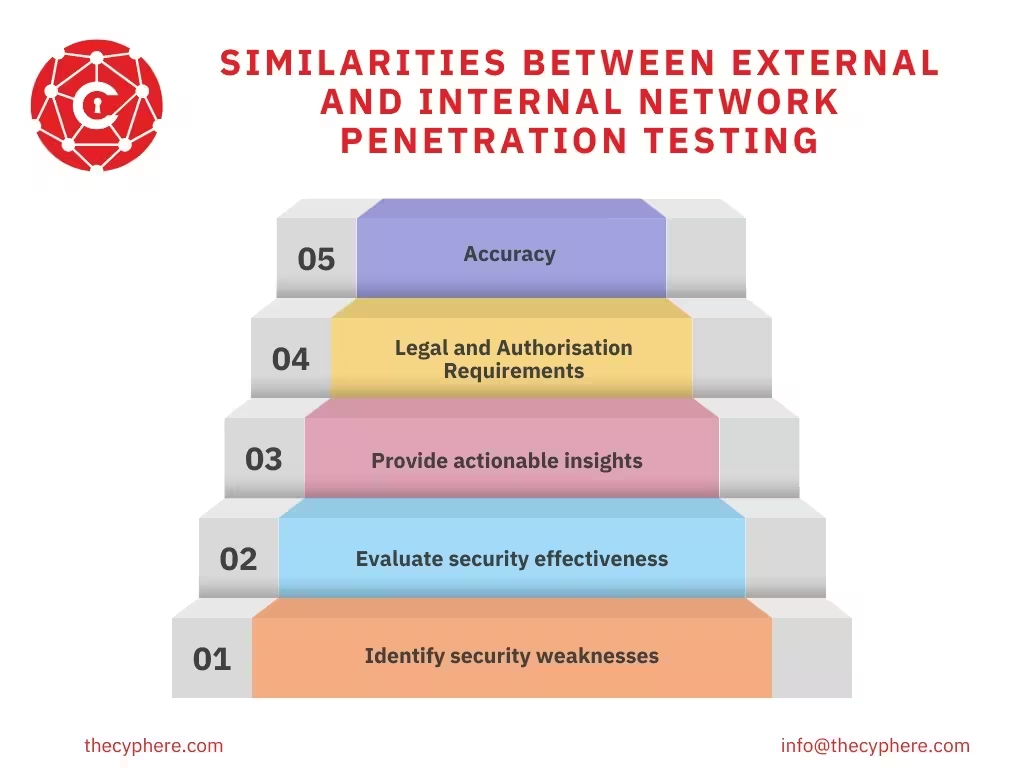
- Identify security weaknesses: Both internal and external network pentests identify network security weaknesses (outdated software, weak access controls) that attackers could exploit. They simulate real-world cyber attack techniques (reconnaissance, exploitation, privilege escalation) to understand how network security responds under stress.
- Evaluate security effectiveness: Internal and external penetration testing techniques evaluate the effectiveness of security controls (Firewalls, intrusion detection systems, authentication mechanisms) to determine whether these controls can withstand threats. They follow a structured process involving planning, intelligence gathering, exploitation, and reporting to identify and exploit security vulnerabilities.
- Provide actionable insights: Internal and external network penetration testing provides actionable insights by highlighting vulnerabilities and remediation recommendations. Organisations strengthen their overall security posture by using these insights.
- Legal and Authorisation Requirements: Pentesters need to get explicit written consent from the client before starting internal or external network penetration testing. Under the Computer Misuse Act 1990, it is mandatory for pentesters to get written consent from the client. It’s illegal to access a computer system without authorisation, regardless of intent. Pentesters must follow guidelines set by the Data Protection Act 2018 and the UK General Data Protection Regulation.
- Accuracy: Internal network penetration tests are highly accurate in identifying risks that external tests may miss, especially those arising from employee actions or poor internal security practices. External network pentests are effective at identifying vulnerabilities in public-facing systems, firewalls, intrusion detection systems, and other external defences. Automated and AI-driven penetration testing frameworks improve accuracy for both internal and external scenarios, especially in large or complex networks, according to a 2022 study by Mohamed Chahine Ghanem, titled “Hierarchical reinforcement learning for efficient and effective automated penetration testing of large networks”.