Cybersecurity risk assessments have become indispensable tools for organizations seeking to protect their assets, data, and reputation. The fundamentals are very much derived from risk assessments in the health and safety domain or traditional assessment methodology; however, they are applied with a cyber security context in cyber risk areas.
A comprehensive understanding of potential hazards and effective control measures is crucial for safeguarding your organization’s assets and achieving a competitive edge.
Let’s dive in.
A cybersecurity risk assessment is a systematic process of identifying, analyzing, and evaluating potential security threats and vulnerabilities within an organization’s IT infrastructure. This process helps security teams understand the likelihood and potential impact of various cyber threats, enabling them to prioritize resources and implement effective countermeasures.
💡A thorough risk assessment is your critical input to the risk management programme. This would enable your organisation to evaluate and treat risks according to its risk appetite. If this is a tick in the box, you can imagine the next steps will be chaotic, causing confusion and leading to ineffective risk management.
Understanding the Importance of Risk Assessment in Cyber Security
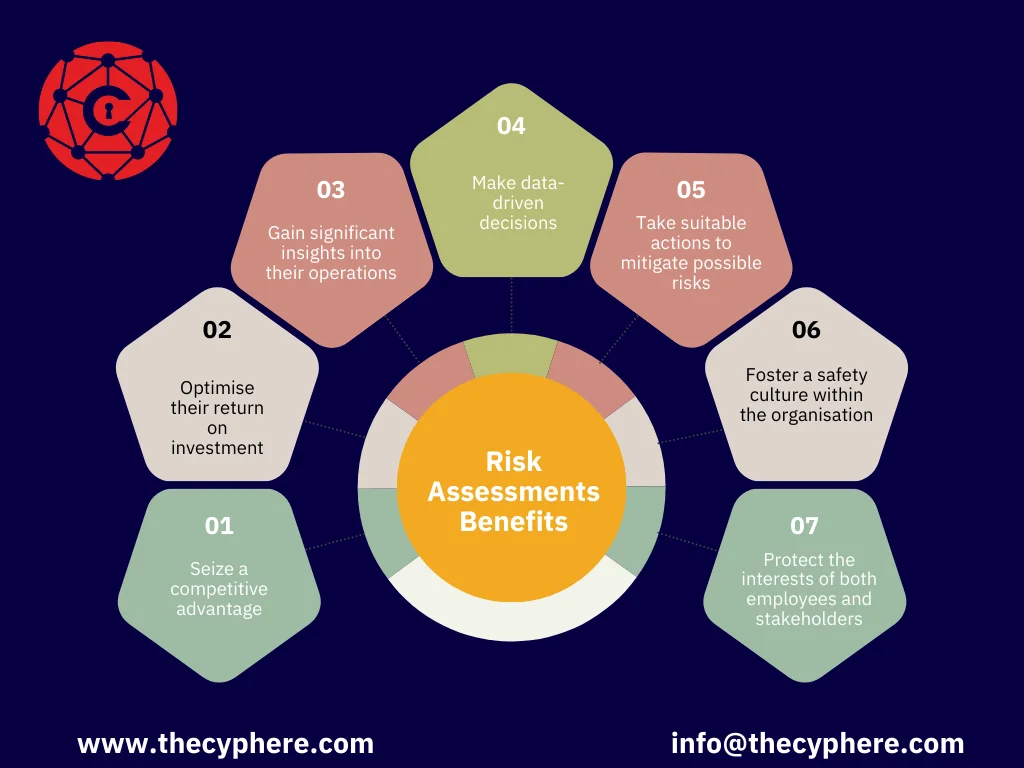
Risk assessments are integral to the backbone of any successful organization. They allow businesses to identify and evaluate security concerns and control risks to eliminate or reduce them. Effective control measures are essential to mitigate these risks and protect employees from potential harm. Here are a few reasons why risk assessment is necessary in cyber security:
-
Proactive Threat Management
Assessments empower organizations to adopt a proactive approach to cybersecurity. By identifying potential threats before they materialize, IT security teams can implement preventive measures, reducing the likelihood of successful attacks and minimizing potential damages.
-
Resource Optimization
With limited budgets and resources, IT security teams must prioritize their efforts effectively. These exercises provide a clear picture of the most critical vulnerabilities and high-impact threats, allowing for more efficient resource allocation to areas that need them most.
-
Compliance and Regulatory Alignment
Many industries are subject to strict data protection and cybersecurity regulations. Regular assessments help organizations demonstrate compliance with standards such as GDPR, HIPAA, PCI DSS, and others. They help avoid fines and legal issues and build trust with customers and partners by identifying and minimizing health and safety risks.
-
Data-Driven Decision Making
These checks provide valuable insights into an organization’s security posture, enabling more informed decision-making at both technical and strategic levels. This data-driven approach helps justify security investments and align cybersecurity strategies with overall business objectives.
-
Enhanced Incident Response
Assessments contribute to more effective incident response planning by identifying potential threats and vulnerabilities in advance. IT security teams can develop targeted response strategies for specific scenarios, reducing response times and minimizing the impact of security incidents.
-
Vulnerability Identification
Regular checks uncover systems, processes, and infrastructure weaknesses that threat actors could exploit. This comprehensive view of vulnerabilities allows IT security teams to address potential weaknesses before they can be exploited.
-
Business Continuity Enhancement
Organizations can identify potential disruptions through risk assessments and develop mitigation strategies to ensure operational resilience. This proactive approach helps maintain business continuity in the face of cyber threats.
-
Third-Party Risk Management
These exercises help evaluate the security posture of vendors, partners, and other third parties with access to sensitive data or systems. This is crucial in today’s interconnected business environment, where supply chain attacks are becoming increasingly common.
-
Stakeholder Awareness
Educate stakeholders about cybersecurity risks and their potential impact on the organization. Communicating risk assessment findings throughout the company fosters a safety culture and ensures all employees are informed about potential hazards and mitigation measures. This increased awareness can lead to better support for security initiatives across the organization.
-
Security Posture Improvement
Risk assessments enable organizations to track progress over time by providing a baseline for measuring and improving overall security. This allows IT security teams to demonstrate the value of their efforts and continuously enhance the organization’s security posture.
So, Why are risk assessments important?
I hope by now it all makes sense. Cybersecurity risk assessments are not just a compliance checkbox but a fundamental component of a robust security strategy.
They provide IT security teams with the insights needed to protect their organizations effectively in an increasingly complex and threat-laden digital landscape. By implementing thorough and regular assessments, organizations can significantly enhance their security posture, make informed decisions about resource allocation, and build resilience against cyber threats.
For a thorough grasp on security risk management along with ensuring regulatory and compliance requirements, having a GRC program in your organisation is very important. You can read more on how GRC services advise organisations to identify, assess and manage risks effectively.
The Anatomy of a Risk Assessment Process
A security risk assessment, considered a formal risk assessment, is designed to identify threats to IT systems, data, and other resources and evaluate their potential business impacts. Such assessments play a significant role for organizations heavily dependent on technology and digital assets.
The critical components of an assessment process are:
-
Asset Identification: Cataloging all critical IT assets, including hardware, software, data, and systems.
-
Threat Identification: Recognizing these assets’ potential internal and external threats.
-
Vulnerability Analysis: Identifying weaknesses in the current security posture that could be exploited.
-
Risk Evaluation: Assessing the likelihood and potential impact of identified threats exploiting vulnerabilities.
-
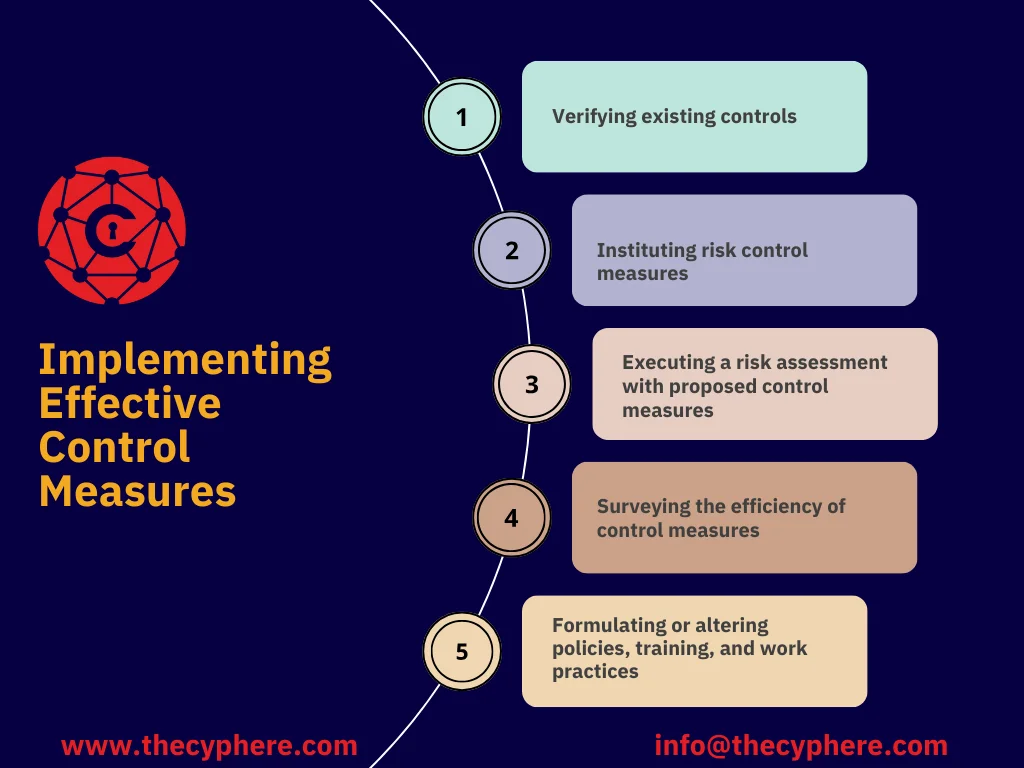
Control Implementation: Developing and implementing security measures to mitigate identified risks.
-
Continuous Monitoring: Regularly reviewing and updating the assessment to address new threats and changes in the IT environment.
A suitable and sufficient risk assessment is essential to ensure health, safety, and well-being before undertaking any activity or task.
The Legal Imperative: Compliance and Risk Assessments
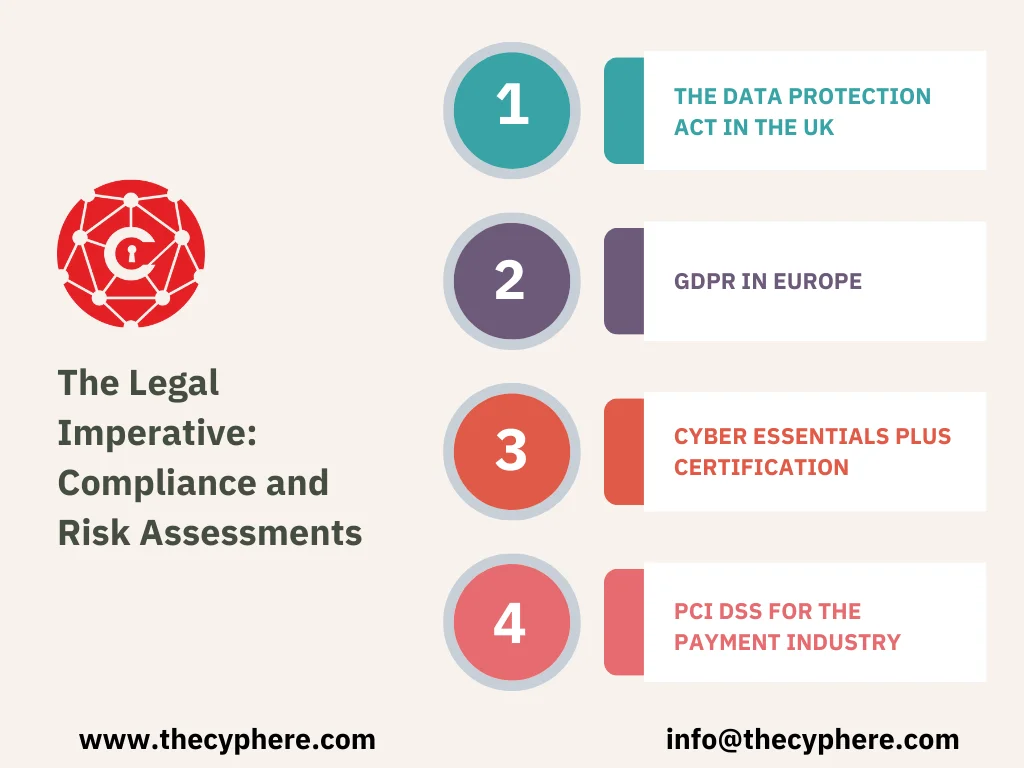
The imperative of compliance assessments cannot be overstated in today’s interconnected world. The Health and Safety Executive (HSE) enforces compliance with health and safety standards, emphasizing the importance of risk assessments in the workplace. Adhering to various cybersecurity regulations and standards is crucial for businesses to ensure they comply with the law and that their data is protected. Examples of such rules and standards include:
-
The Data Protection Act in the UK
-
GDPR
-
Cyber Essentials Plus certification
-
PCI DSS for the payment industry
Failure to comply with these regulations can result in fines, legal penalties, and adverse business publicity. Organizations can demonstrate their commitment to their employee’s and customers’ safety and well-being by conducting well-being and implementing appropriate security measures at work environment. It helps businesses avoid legal issues and enhances their reputation as responsible and trustworthy entities.
Risk Assessment Methodologies
Several methodologies can be employed to conduct cybersecurity risk assessments. Some of the most widely used approaches include:
Conducting relevant risk assessments is crucial to effectively managing health and safety risks. These assessments should be periodically reviewed and revisited after incidents or changes to ensure that control measures are appropriate and effective.
1. NIST Risk Management Framework (RMF)
The National Institute of Standards and Technology (NIST) provides a comprehensive risk management framework, including guidelines for conducting risk exercises. This approach is particularly relevant for organizations working with U.S. government agencies.
2. ISO 27001
This international standard provides a systematic approach to managing information security risks. It includes guidelines for risk assessment as part of a broader Information Security Management System (ISMS).
3. OCTAVE (Operationally Critical Threat, Asset, and Vulnerability Evaluation)
Developed by Carnegie Mellon University, OCTAVE is a risk-based strategic assessment and planning technique for security. It’s beneficial for organizations to align their IT security strategies with overall business objectives.
4. FAIR (Factor Analysis of Information Risk)
FAIR is a quantitative risk analysis methodology that helps organizations measure and manage information risk from a financial perspective. It’s beneficial for communicating risk to non-technical stakeholders.
Risk Management and the Bottom Line
Effective risk management directly impacts a company’s bottom line. Risk assessments reduce the likelihood of accidents and identify long-term health risks, saving lives and reducing injuries. Recognizing potential risks enables companies to make data-driven decisions to lessen them and protect their bottom line. This includes formulating strategies to reduce or eliminate threats, guaranteeing business continuity, and protecting the company’s value for stakeholders.
⚡ Author’s tip: Combining thorough risk assessment mapped with business-related outcomes such as Cyber Essentials Plus certification would lead to definitive improvements on lower cyber insurance premiums, inclusion into certain bidding or pre-requisites for business opportunities and an overall reduction in attack surface. This will be an economical step and adhere to good security practices whilst serving the business’ regulatory and compliance requirements.
Risk assessments offer many benefits beyond compliance. They enable businesses to make data-driven decisions, identify opportunities for improvement, and strengthen performance and safety. By investing in assessment processes, organizations can unlock additional advantages that contribute to their overall success.
Best Practices for Effective Risk Assessments
IT security teams would benefit from aligning their tasks with best practices to ensure long-term strategic advantages. The following best practices ensure effective risk assessment processes:
-
Establish a Clear Scope: Define assessment boundaries, including systems, data, and processes to evaluate. This ensures a focused and manageable process.
-
Involve Stakeholders: Engage IT, legal, compliance, and business units for valuable insights into potential risks and security measures’ impact on operations.
-
Combine Qualitative and Quantitative Methods: Use both approaches to understand risks and their potential impacts comprehensively.
-
Leverage Automation: Utilize useful tools, reputed cloud services, threat intelligence gathering, and risk analysis to enhance efficiency and accuracy.
-
Conduct Regular Assessments: Perform assessments regularly during significant changes in the IT environment or business operations.
-
Prioritize Risks: Use risk matrices or prioritization methods to effectively focus on critical risks and allocate resources.
-
Document and Communicate Findings: Thoroughly document the process, findings, and recommendations. Communicate results to all stakeholders.
-
Integrate with Overall Risk Management: For a holistic approach, incorporate cybersecurity risk assessments into the broader risk management framework.
💡Be it mobile, cloud, or AI, change has been a central component for organisations, big or small. If you don’t measure change and associated risks to your organisation, these gaps relate to risks. Our job as security consultants is to ensure customers can see those blind spots and help them make informed decisions about reducing the associated risks.
Challenges and Considerations in Cybersecurity Risk Assessments
Since COVID, we have all seen how the world has changed, and massive difference makers in this day and age are adopting new technologies. Here are a few known challenges and the risks involved that should be considered during risk assessment scoping:
-
Rapidly Changing Threat Landscape: Stay informed about emerging threats and vulnerabilities to keep assessments relevant.
-
Complex IT Environments: Develop comprehensive assessment methodologies across diverse, distributed infrastructures.
-
Quantifying Risks: Strive to develop robust metrics and models for accurate risk quantification, especially in financial terms.
-
Resource Constraints: Balance assessment depth with available resources, considering time, expertise, and tools required.
-
Balancing Security and Business Needs: Work closely with business units to balance security controls with operational efficiency and user experience.
-
Data Quality and Availability: Invest in data collection and management processes to support practical risk assessments.
-
Human Factors: Incorporate human behaviour risks, such as social engineering and insider threats, into assessment methodologies.
Summary
Risk assessment is an indispensable tool for businesses seeking to thrive in today’s dynamic and competitive world by effectively identifying and mitigating health and safety risks. By investing time and resources into comprehensive assessment processes, companies can secure their operations, protect their bottom line, and foster a culture of resilience and adaptability in the face of change.
What sets today’s risk assessment apart is Cyphere’s comprehensive approach, contextual to your environment, not some copy/paste template. Their assessment process is executed through multiple steps, including scoping, risk identification, risk analysis, quantification, and establishing and applying security controls.